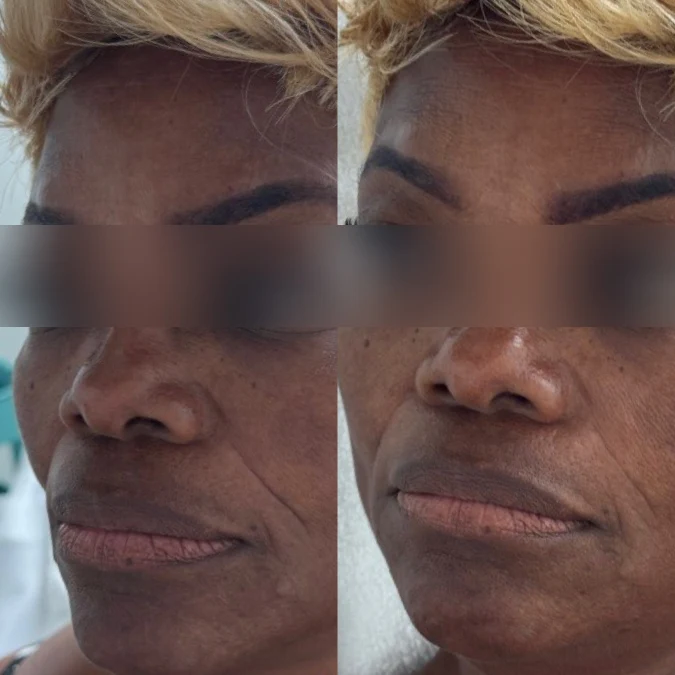
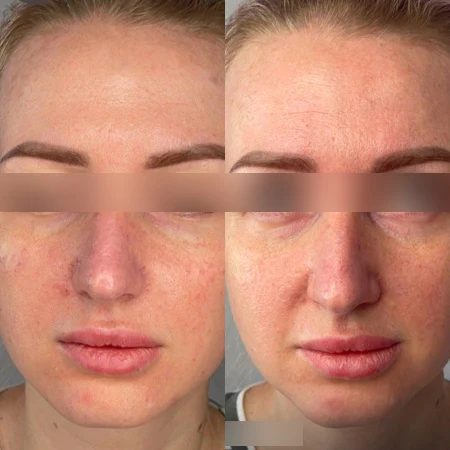
What a Thread Lift Is and How It Works
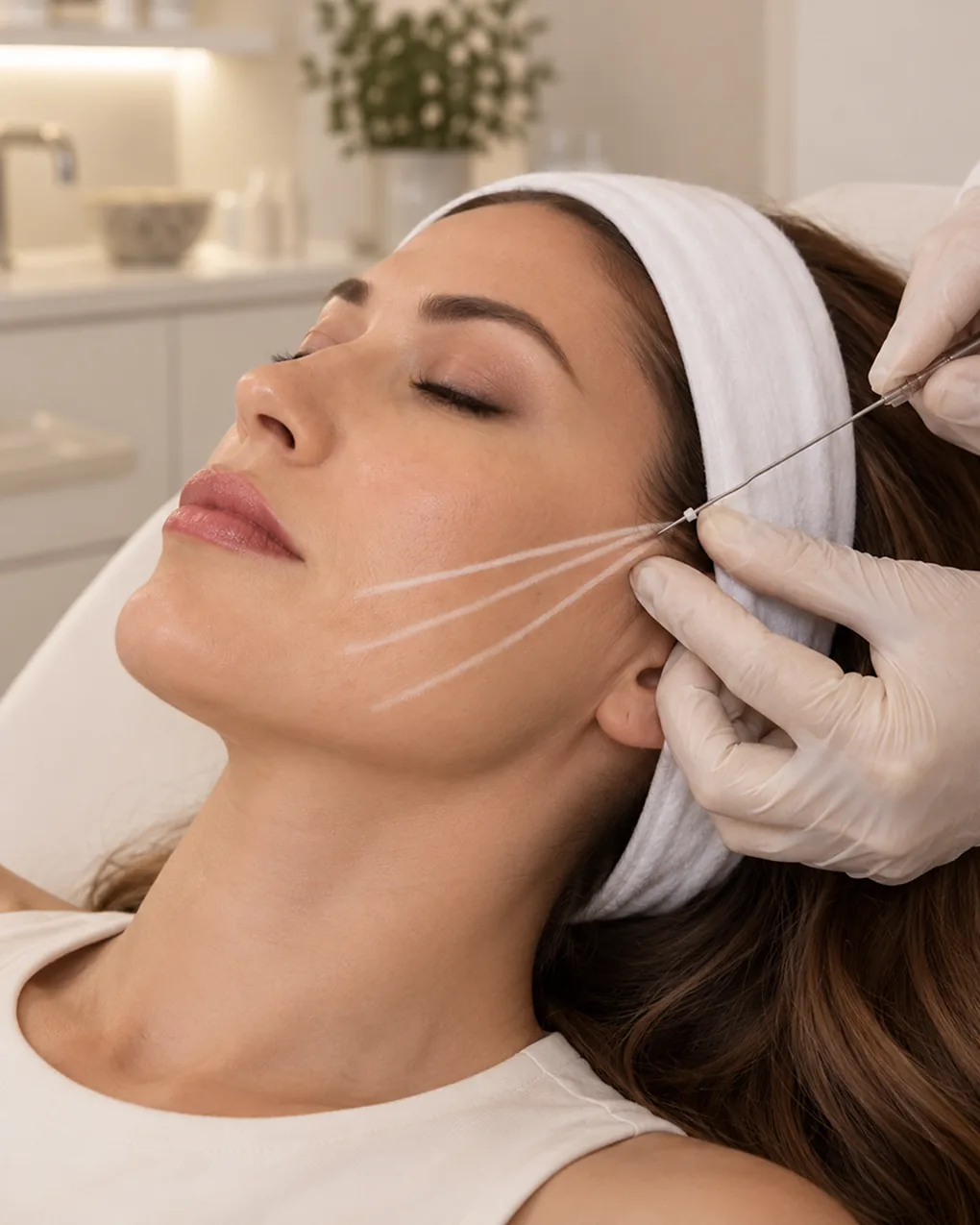
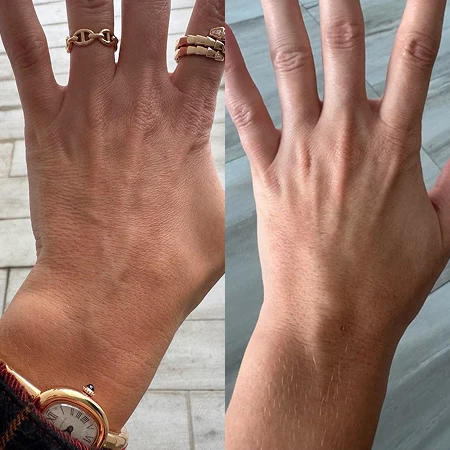
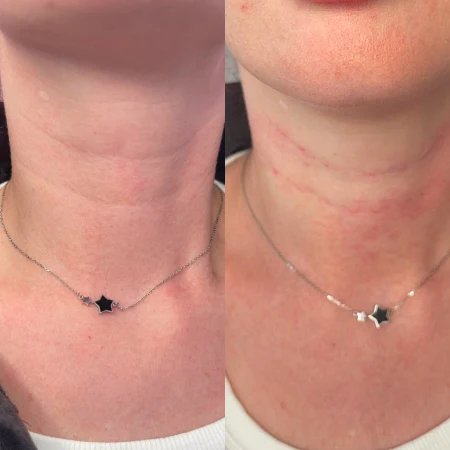
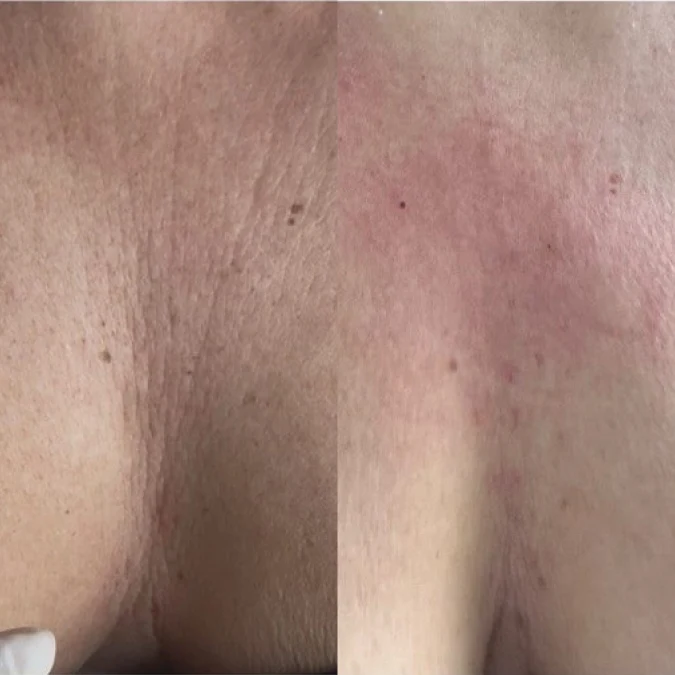
Threads are placed under the skin with a fine needle or cannula, along pre-mapped tension lines. Barbed threads anchor into tissue and create an immediate mechanical lifting effect, lifting sagging facial tissue. Smooth threads don’t produce a noticeable lift, but gradually stimulate your own collagen production, firming and thickening the skin from within. Over time, all thread types dissolve naturally, while the effect achieved — both the mechanical lift and the collagen stimulation — is sustained by the tissue’s renewed structure.
Barbed Threads vs. Smooth Threads: What’s the Difference
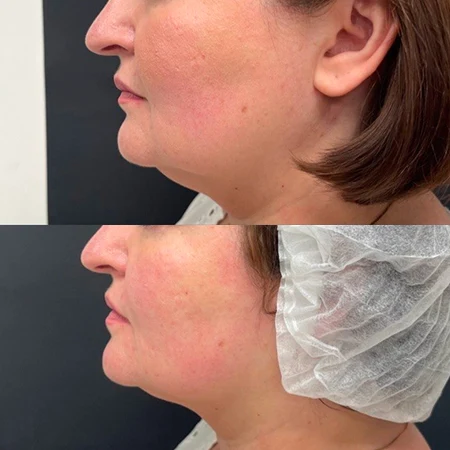
These are two different thread types, and we always walk through the difference at consultation. Barbed threads anchor into tissue and deliver a visible lifting effect right after treatment; they suit correcting the facial oval, jowls, and sagging in the midface. Smooth threads are finer, without barbs; rather than lifting tissue mechanically, they act as a biostimulator, gradually improving skin density and texture. The two types are often combined in one protocol: barbed threads for lift, smooth threads for overall skin quality. Which option, or combination, fits you is determined at your in-person consultation.
PDO Thread Lift vs. Surgical Facelift: What’s the Difference
These procedures differ in scale, and we always help patients understand which fits their situation. A surgical facelift involves incisions, general anesthesia, and a full recovery period, and delivers the most dramatic, longest-lasting result for significant age-related tissue laxity. A PDO thread lift is a minimally invasive alternative — no surgery, no general anesthesia, and a short recovery — suited to moderate aging or as a maintenance treatment. A thread lift doesn’t replace surgery for significant laxity, but for many patients it’s an effective, gentler solution. Your specialist assesses tissue condition at consultation and will tell you honestly if your case calls for a surgical approach.
Threads or Fillers: Which Is Right for Facial Contour
Threads and fillers solve different problems, and they’re often combined. Fillers restore lost volume in specific areas — cheeks, cheekbones — but don’t lift sagging tissue. Threads work differently: they mechanically tighten tissue along the line of placement, correcting the definition and contour of the facial oval specifically. If volume loss is the main issue, filler is usually the more effective choice; if it’s sagging tissue and a blurred contour, a thread lift is. Your specialist determines the optimal correction protocol individually.
How the Treatment Works
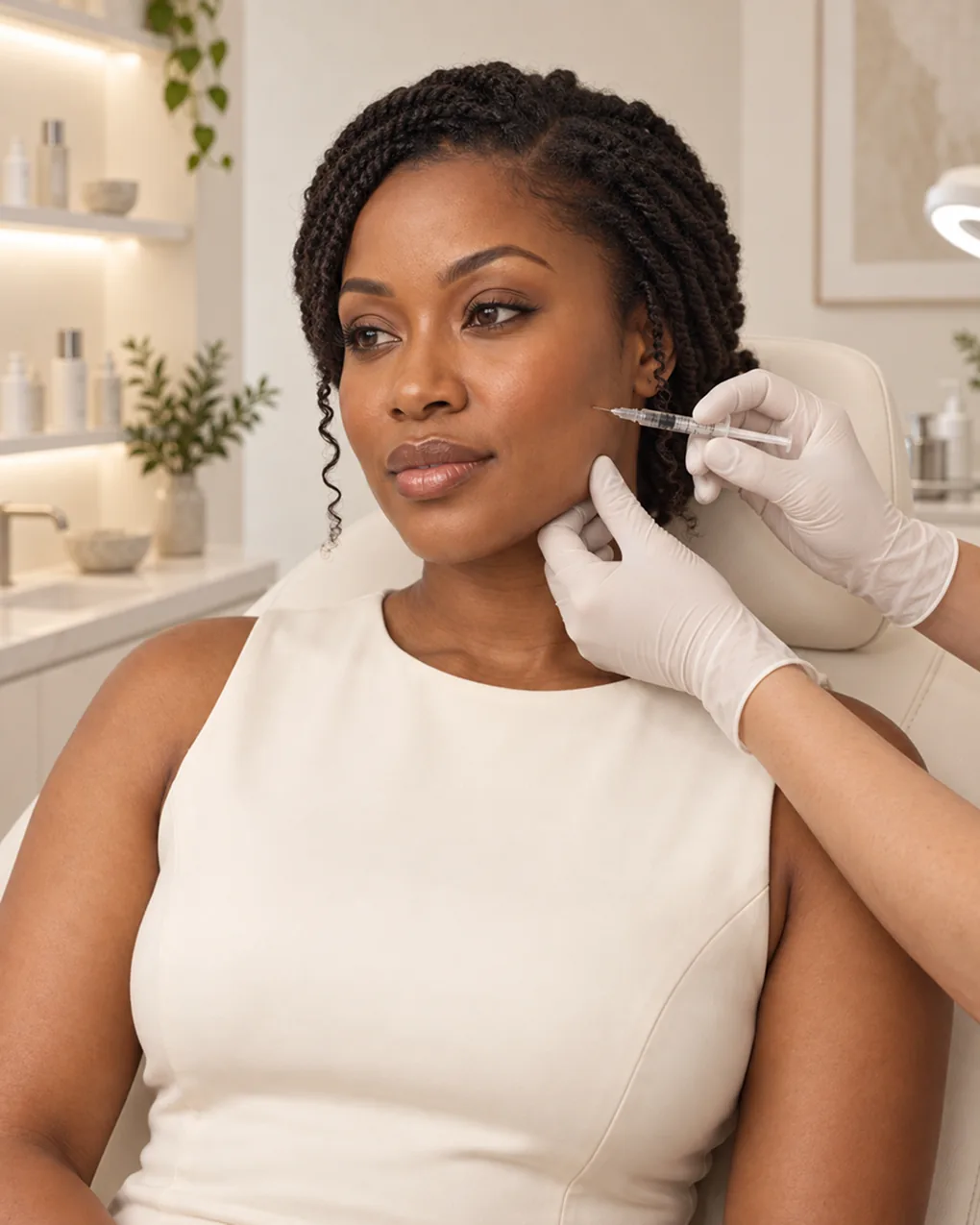
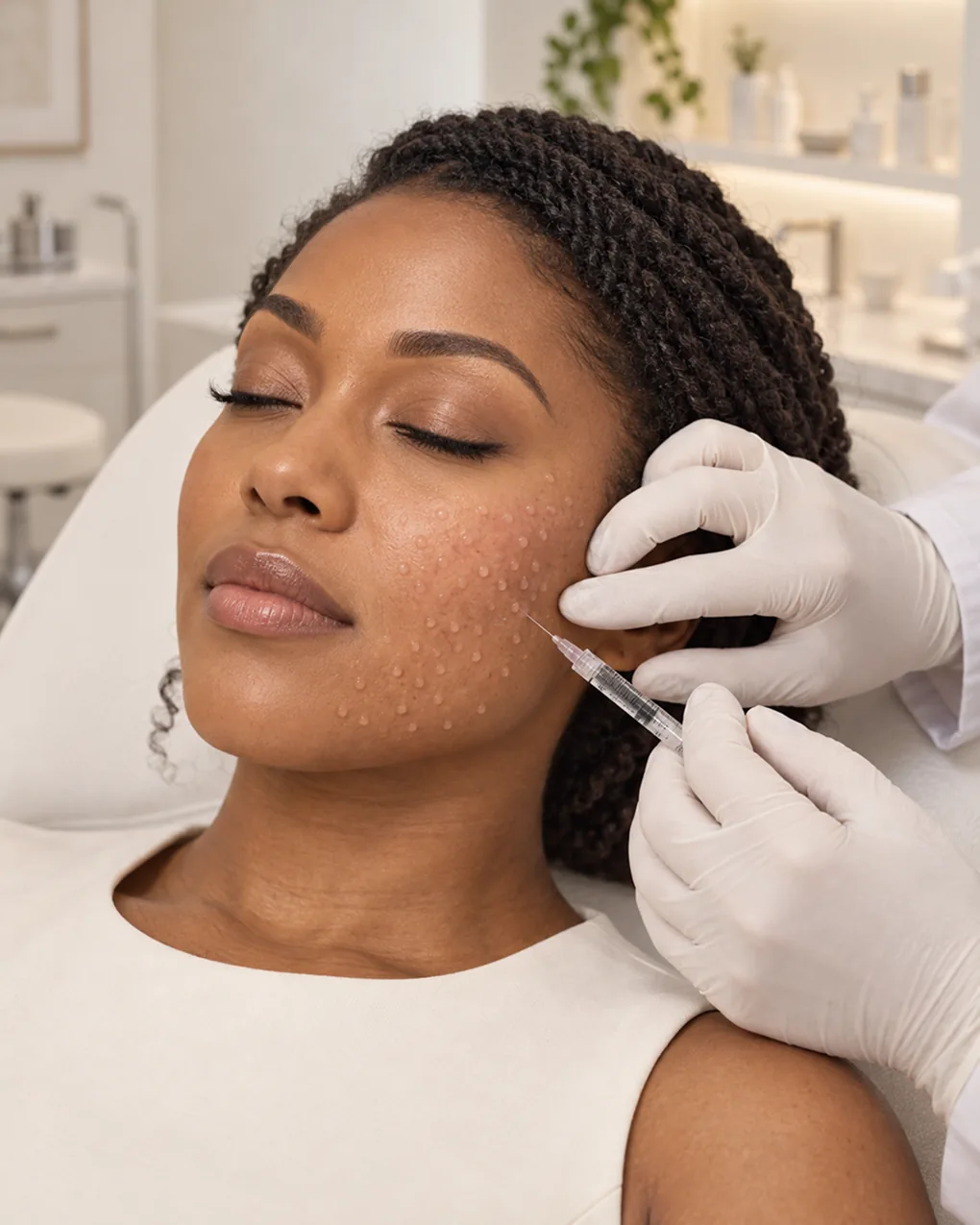
Your specialist examines your face, determines the treatment areas and thread type, and applies anesthetic for comfort. The procedure itself takes 40–60 minutes, depending on the number of threads and areas treated. Right after placement, swelling, redness, small bruises, and a mild sensation of tissue tension are possible — a normal reaction that resolves within a few days.
You can return to your normal routine the next day, but for the first 1–2 weeks we recommend avoiding exaggerated facial expressions, opening your mouth wide, saunas and steam rooms, and sleeping on your back, so the threads aren’t displaced before they anchor into tissue.
How Long Thread Lift Results Last
On average, results last 12–24 months, depending on the thread type, treatment area, and individual tissue characteristics. Barbed threads give a more pronounced but gradually fading lifting effect, while results from smooth threads build more slowly through collagen stimulation and also outlast the treatment itself, as long as the renewed collagen fibers continue to support skin density.
Safety: Are Threads Visible, and Can They Shift?
One of the top questions before treatment is whether threads will be visible or palpable under the skin. With the right thread type and thickness, and precise placement at the correct depth, threads aren’t visible or palpable — they sit within the subcutaneous fat layer, not the superficial skin layers. That’s exactly why your specialist’s experience and precise protocol selection directly shape how natural your result looks.
The second common worry is thread migration or displacement. This is generally the result of imprecise placement technique or not following aftercare guidance in the first few weeks (strong facial expressions, sleeping on your side), rather than a property of the threads themselves. Following simple aftercare guidance in the first 1–2 weeks keeps this risk to a minimum.
Cost of a PDO Thread Lift in Boca Raton
Cost depends on the thread type and number used, as well as the area and complexity of correction — your specialist will confirm the exact plan and price after your consultation and exam.
Why Patients Choose VESA
Aleksandra Grebenshchikova holds a medical degree from Kemerovo State Medical Academy (Russia) and advanced training in aesthetic cosmetology and injection techniques from The First Institute of Aesthetics and Cosmetology in Moscow. She practices in Florida as a Registered Nurse with a Master of Science in Nursing (RN, MSN, Florida National University) and is VESA’s injector, with 15 years of experience in injectable aesthetics, including facial thread lifts with barbed and smooth threads.
We always select the thread type and protocol individually, rather than offering a one-size-fits-all solution — so results stay natural, with threads that are neither visible nor palpable under the skin.
FAQ: PDO Thread Lift
What’s the difference between barbed and smooth threads?
Barbed threads anchor into tissue and deliver a mechanical lifting effect. Smooth threads are finer and act as a biostimulator, gradually improving skin density without a pronounced lifting effect.
Are threads visible under the skin?
With the right thread type and precise placement at the correct depth, threads aren’t visible or palpable.
Can threads shift?
Displacement is usually linked to imprecise placement technique or not following aftercare guidance in the first few weeks, rather than the threads themselves. Following simple aftercare guidance keeps this risk to a minimum.
How long do thread lift results last?
On average, 12–24 months, depending on the thread type and individual tissue characteristics.
Does a thread lift replace a surgical facelift?
No — for significant age-related laxity, a surgical facelift is more effective. A thread lift suits moderate changes or works as a maintenance treatment; your specialist will assess this honestly at consultation.
Which is better for facial contour — threads or fillers?
Fillers restore volume in specific areas; threads tighten sagging tissue. The two are often combined — your specialist determines the optimal protocol individually.
Does a thread lift hurt?
Discomfort is minimal thanks to local anesthetic. The procedure takes 40–60 minutes.
Are there any contraindications?
Yes — pregnancy and breastfeeding, active inflammatory skin conditions, bleeding disorders, and known sensitivity to thread material. A full list is reviewed at consultation.
Individual results vary and are not guaranteed. A PDO thread lift is a medical treatment that requires an in-person consultation to review candidacy and contraindications. Information on this page is for general reference only and does not replace a consultation with a specialist.