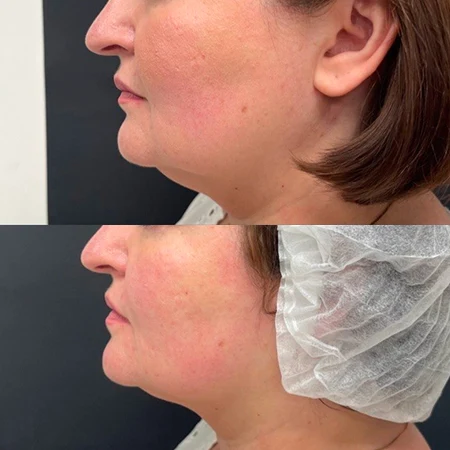
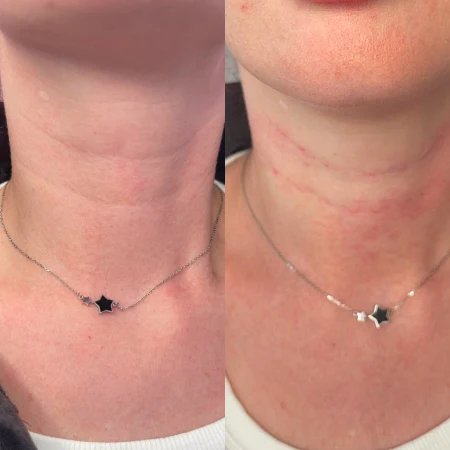
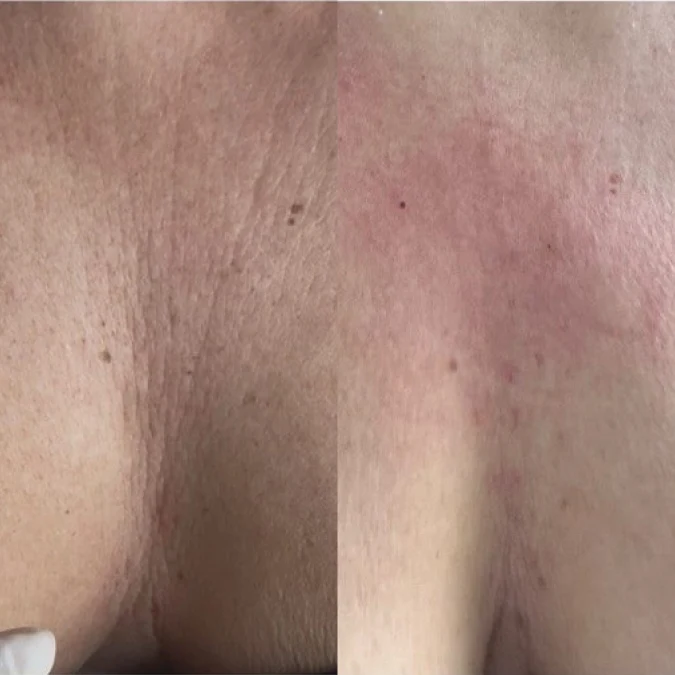
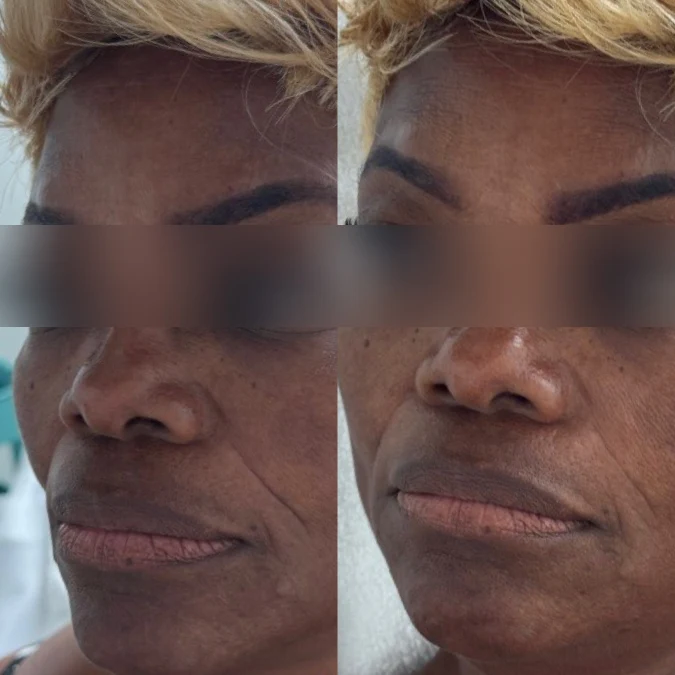
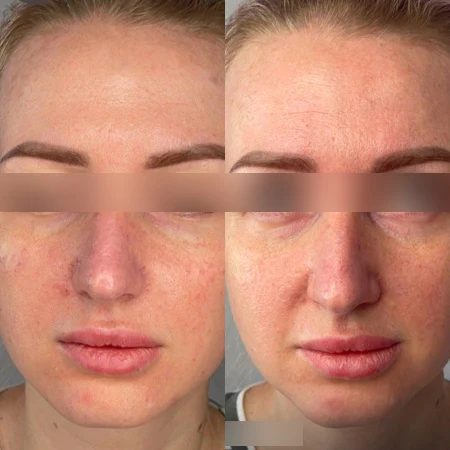
What Microneedling Is and How It Works
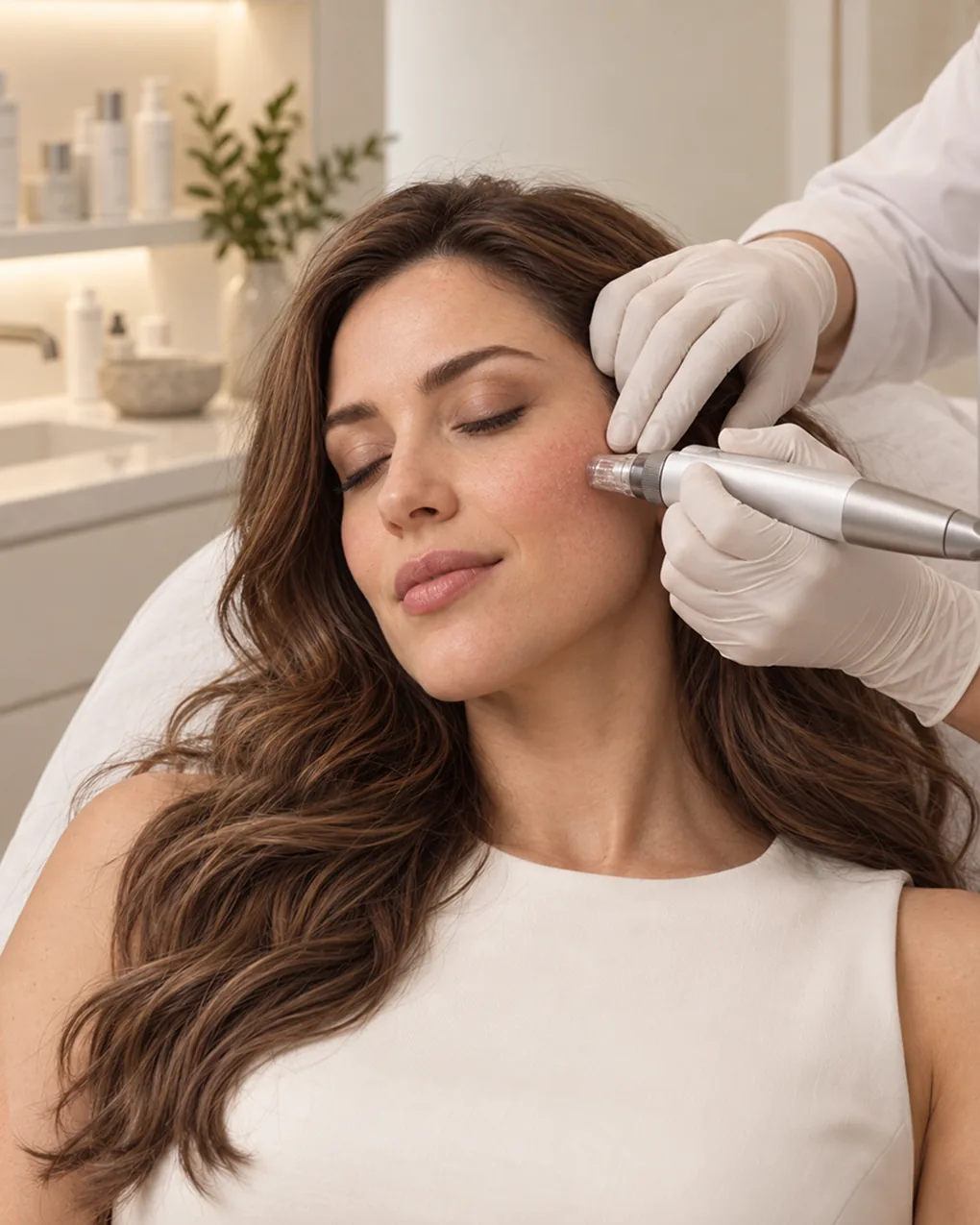
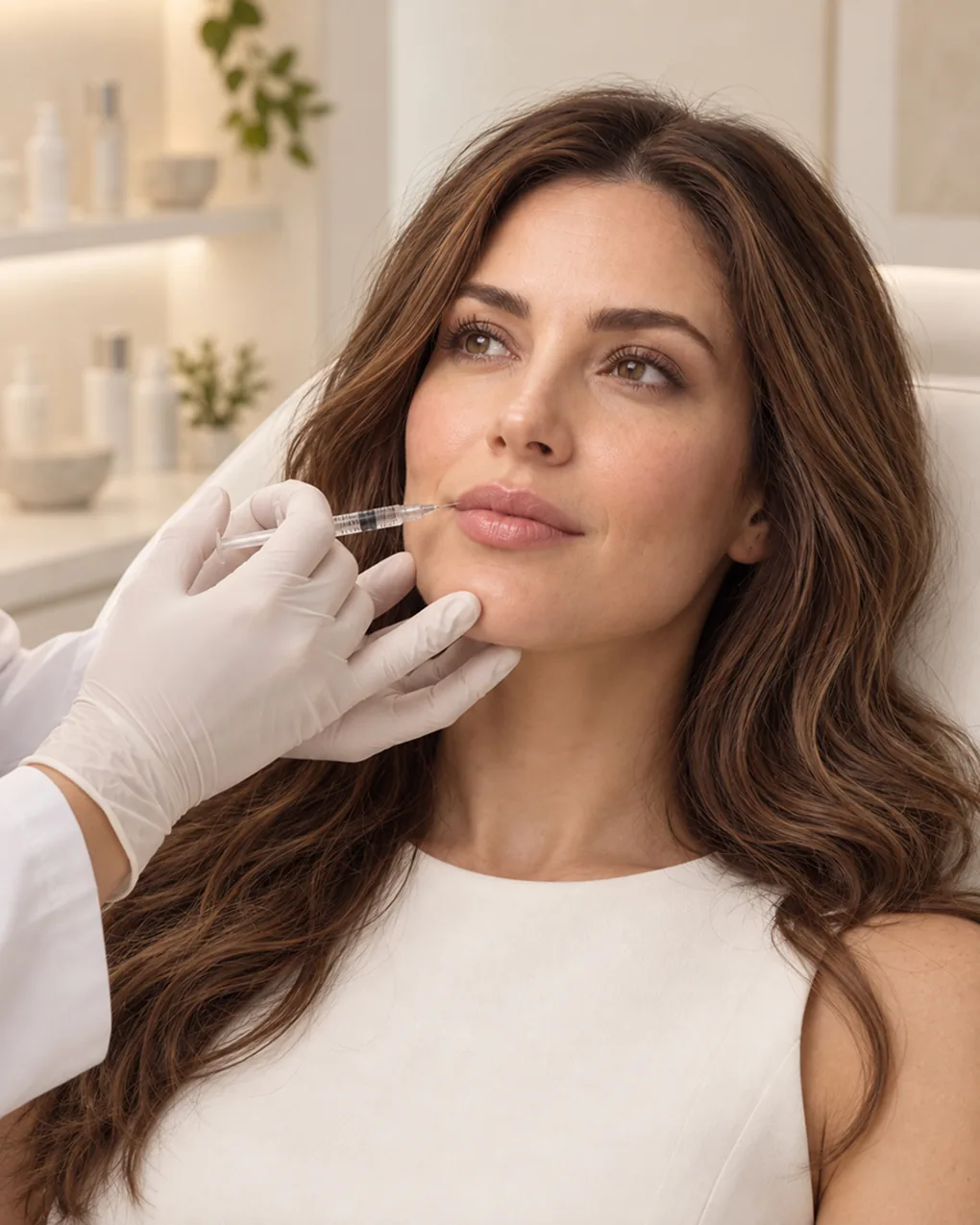
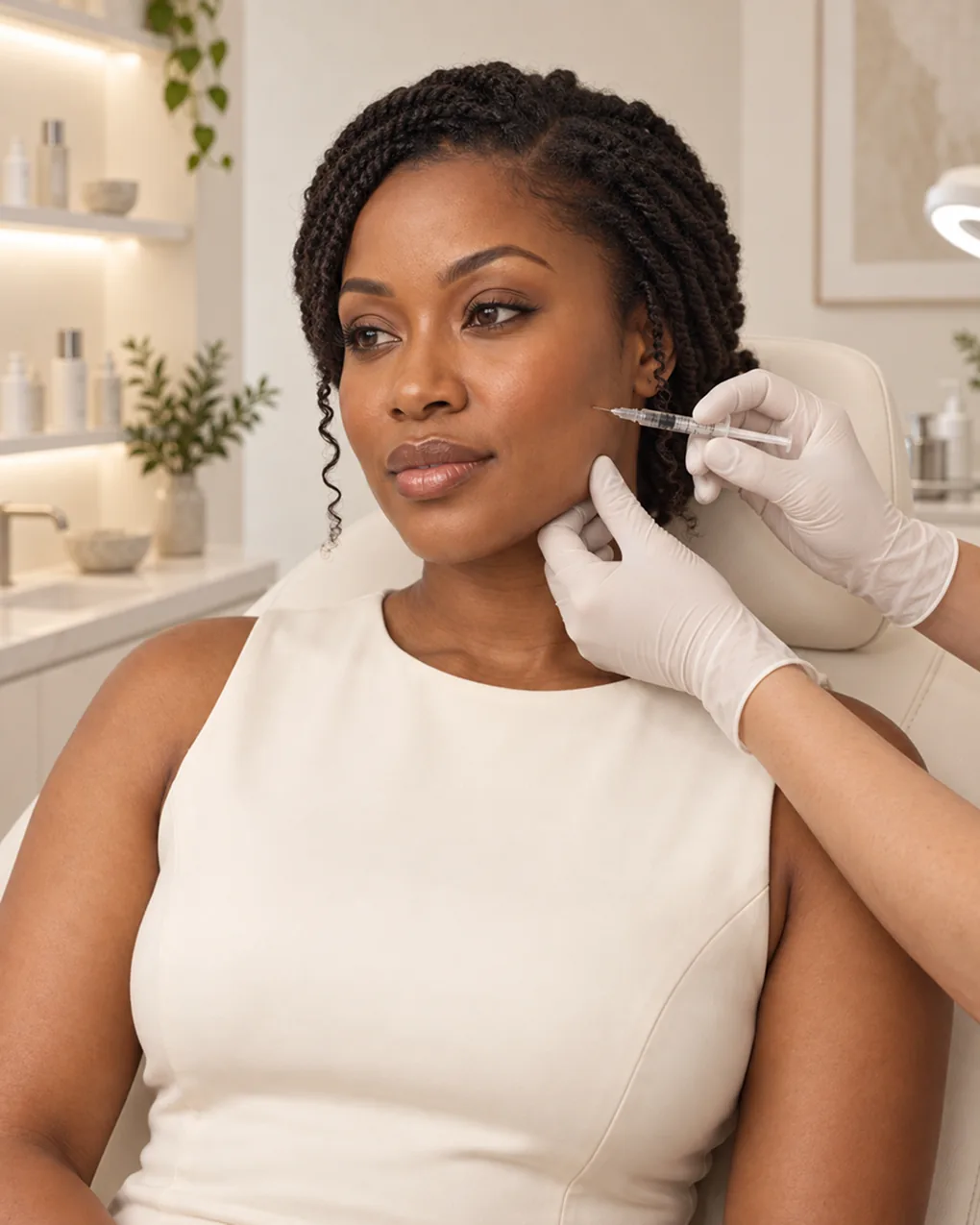
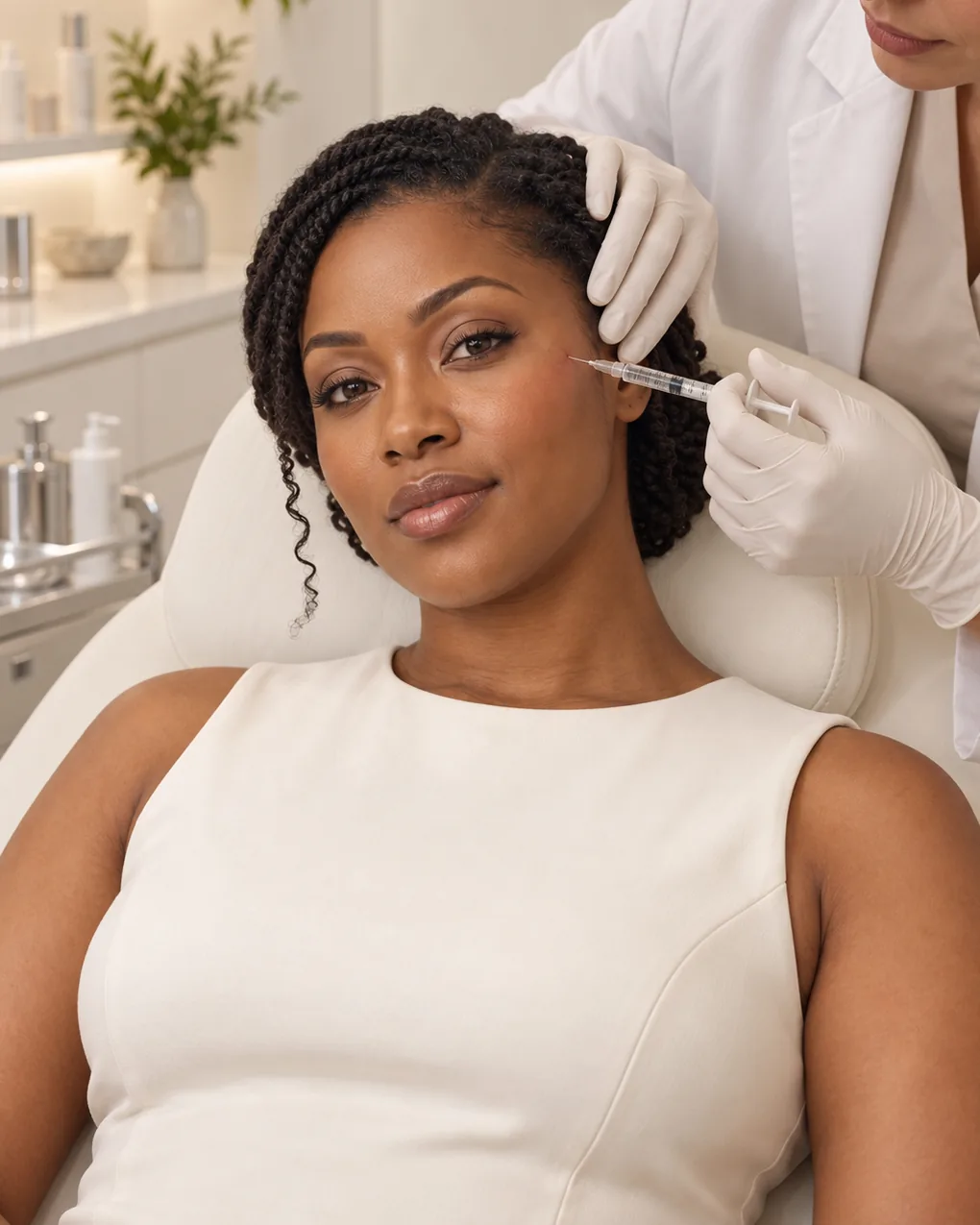
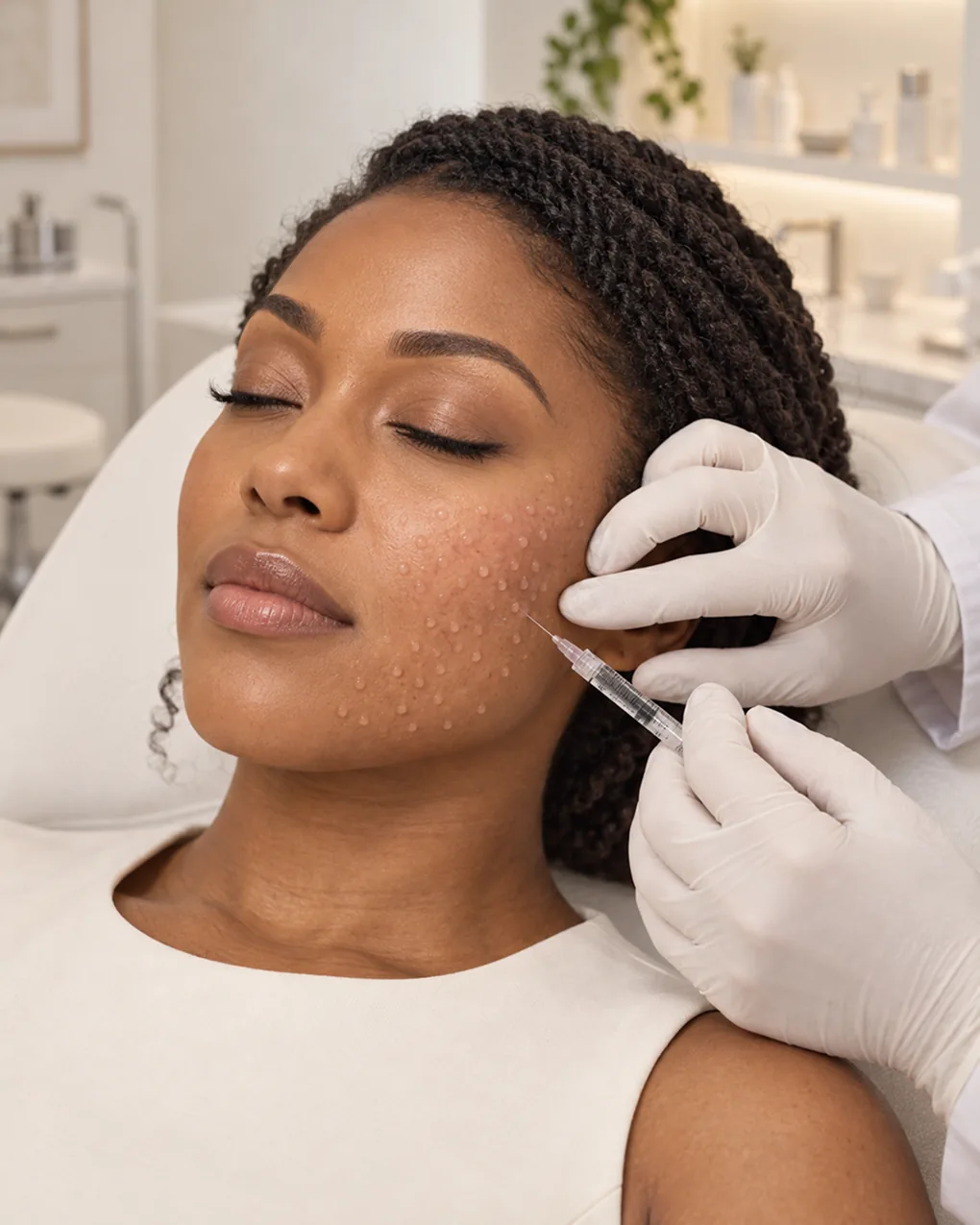
A specialized device with a cartridge of ultra-fine needles creates hundreds of microscopic punctures in the epidermis and dermis. These controlled micro-injuries trigger the healing cascade: your body reads them as a signal to renew tissue and starts producing new collagen and elastin. There’s an added benefit, too — the micro-channels created temporarily increase skin’s permeability, so serums applied during or right after treatment are absorbed significantly more effectively than with a standard skincare routine (more on which serums we use below). Each treatment is performed with an individual, single-use cartridge.
Which Serums We Pair With Microneedling
Through the micro-channels created, skin absorbs active serums especially well — the same biostimulators we use in skin boosters and mesotherapy:
- Hyaluronic acid — hydrates, replenishes the skin’s water balance, and leaves skin looking fuller and smoother.
- NAD+ — supports and accelerates cellular energy metabolism and cell repair, builds resistance to oxidative stress, and supports DNA repair processes. The effect: glow, hydration, improved texture, and gradually firmer, better-quality skin.
- Exosomes — a cell-signaling technology that boosts cell communication, accelerating regeneration and improving texture, hydration, and elasticity, while softening fine lines and refining enlarged pores.
- PDRN (polynucleotides) — the primary regenerative ingredient, supporting tissue repair and fibroblast activity; often used in protocols for rosacea and inflamed or irritated skin.
- Glutathione — an antioxidant that can help even out skin tone and add radiance.
Your specialist selects the serum for your goal — hydration, regeneration, antioxidant protection, or even skin tone. The difference between microneedling, mesotherapy, and skin boosters comes down to the depth and technique of delivering active ingredients into the skin, not the ingredients themselves.
How the Treatment Works
Your specialist reviews your skin and, if you’d like, applies numbing cream for comfort. The device passes evenly over the whole area, with treatment depth customized to your goal. Right after treatment, skin looks flushed, similar to a mild sunburn — an expected reaction that typically resolves within 1–3 days. Microneedling suits all skin types.
You can return to your normal routine the next day, though for the first few days we recommend avoiding direct sun, intense exercise, and harsh skincare products on the treated area.
Combining With Other Treatments
Microneedling pairs well with other treatments that enhance results: applying hyaluronic acid or growth factors right after treatment, or combining with PRP — where your own plasma is delivered through the micro-channels created, amplifying the collagen-stimulating effect. Your specialist will recommend the best combination at consultation.
How Many Sessions You’ll Need, and When Results Appear
A standard course is typically 4–6 sessions, spaced 4 weeks apart — it’s the course, not a single session, that produces a pronounced, lasting improvement in skin texture. Initial changes are visible within a few weeks of starting the course, with the full effect developing gradually, as collagen renews, over the following months after your course is complete.
Safety and Contraindications
Cost of Microneedling in Boca Raton
Cost depends on the area treated, any additional serums used, and the number of sessions in your course — your specialist will confirm the exact plan and price after your consultation and skin assessment.
Why Patients Choose VESA
Aleksandra Grebenshchikova holds a medical degree from Kemerovo State Medical Academy (Russia) and advanced training in aesthetic cosmetology and injection techniques from The First Institute of Aesthetics and Cosmetology in Moscow. She practices in Florida as a Registered Nurse with a Master of Science in Nursing (RN, MSN, Florida National University) and is VESA’s injector, with 15 years of experience in aesthetics, including microneedling and its combination with PRP and other skin-rejuvenation methods.
We always customize treatment depth and the course protocol to the real condition of your skin.
FAQ: Microneedling
What’s the difference between microneedling and a chemical peel?
Microneedling creates mechanical micro-injuries with fine needles, stimulating collagen production from within. A chemical peel works on the skin’s surface with a chemical solution. The two methods address different goals and are sometimes combined.
How many sessions do I need for a course?
Usually 4–6 sessions, spaced 4 weeks apart — the course delivers a pronounced, lasting result.
Does microneedling hurt?
Discomfort is minimal — numbing cream is applied before treatment.
How long is recovery?
Redness similar to a mild sunburn typically resolves within 1–3 days. You can return to your normal routine the next day.
Does microneedling work for all skin types?
Yes, microneedling suits all skin types and tones.
Can microneedling be combined with PRP?
Yes, your own plasma (PRP) is delivered through the micro-channels created right after treatment, amplifying the collagen-stimulating effect.
When will I see results?
Initial changes are visible within a few weeks of starting the course, with the full effect developing gradually over the following months after it’s complete.
Are there any contraindications?
Yes — active inflamed acne breakouts, an active herpes outbreak, pregnancy, a tendency toward keloid scarring, and bleeding disorders. A full list is reviewed at consultation.
Individual results vary and are not guaranteed. Microneedling is a cosmetic treatment that requires an in-person consultation to review candidacy and contraindications. Information on this page is for general reference only and does not replace a consultation with a specialist.