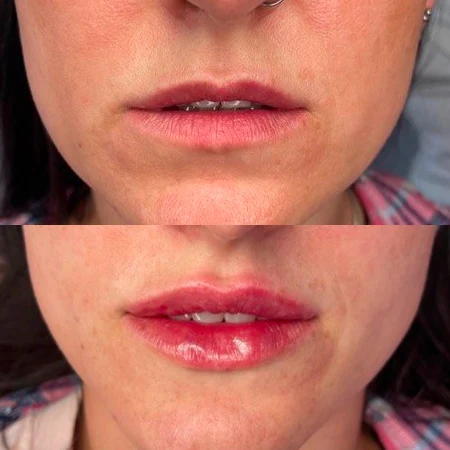
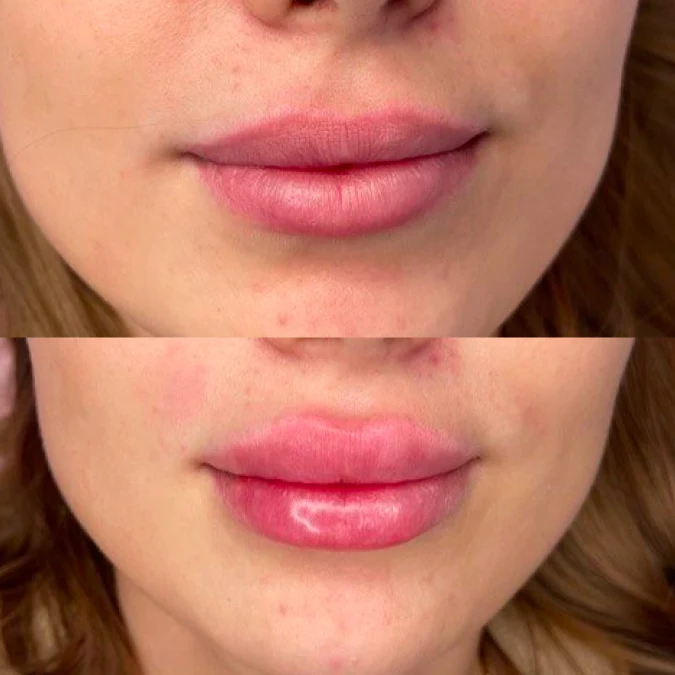
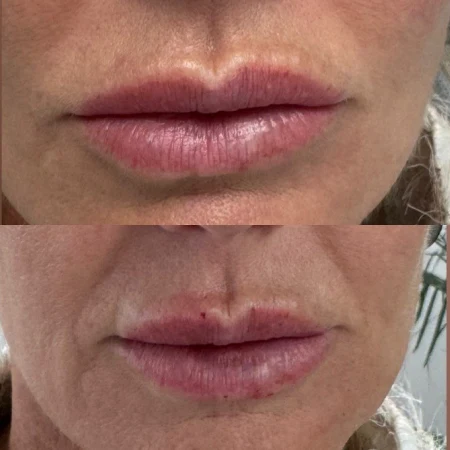
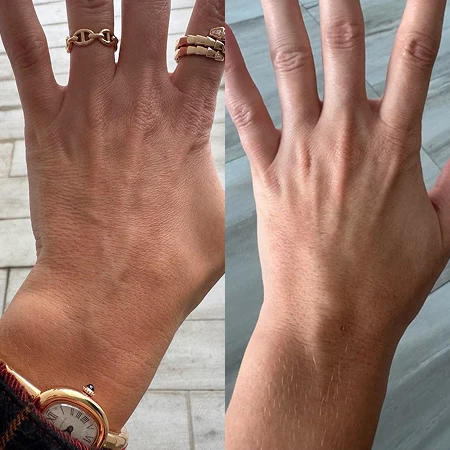
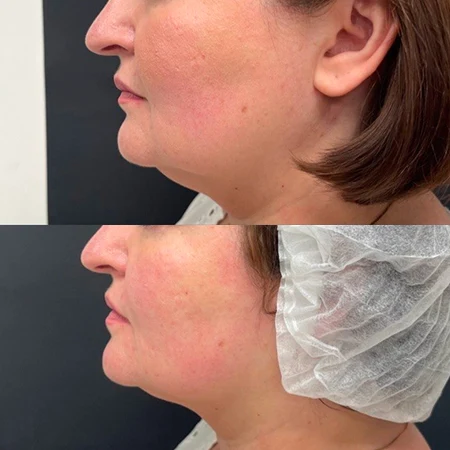
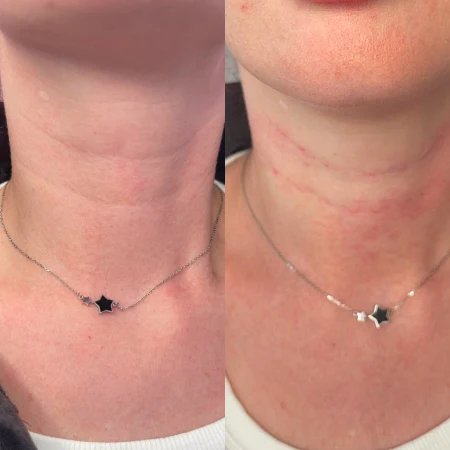
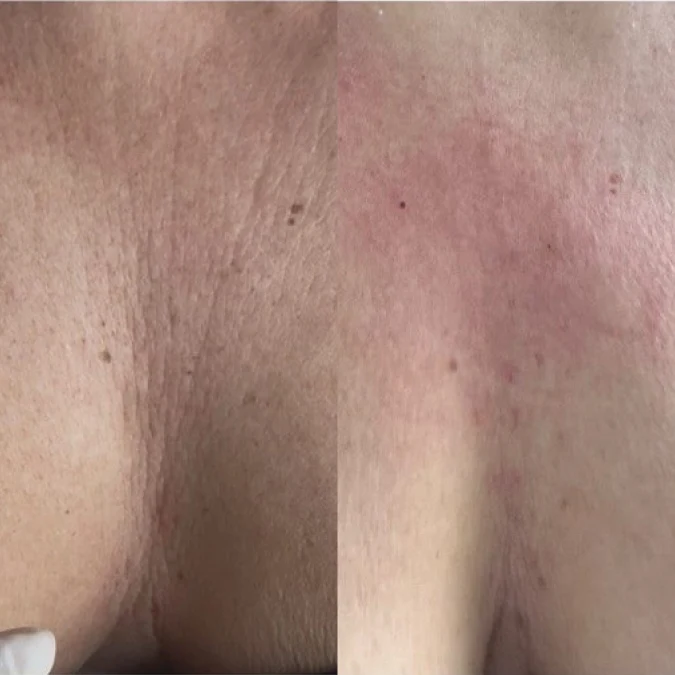
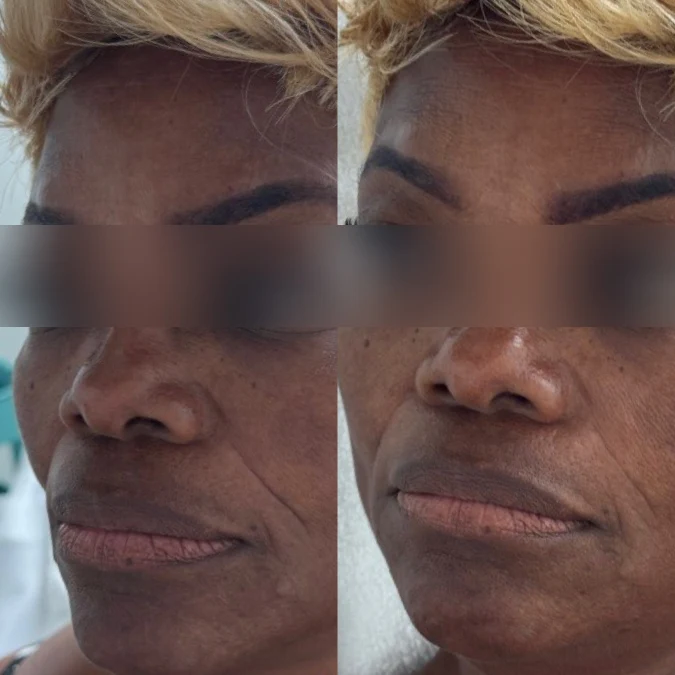
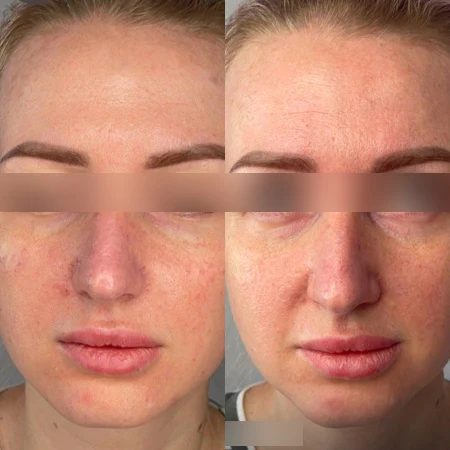
What Mesotherapy Is and How It Works
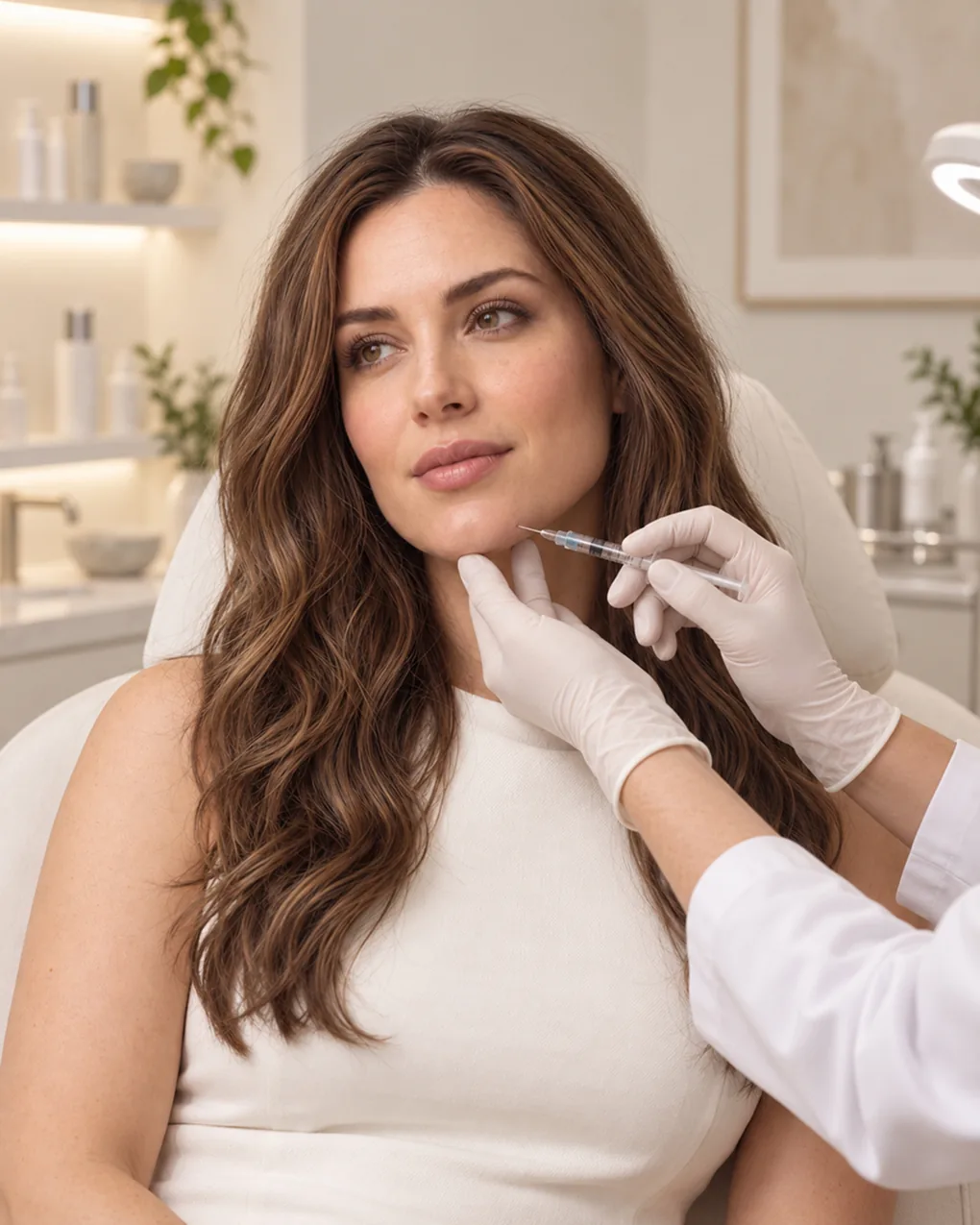
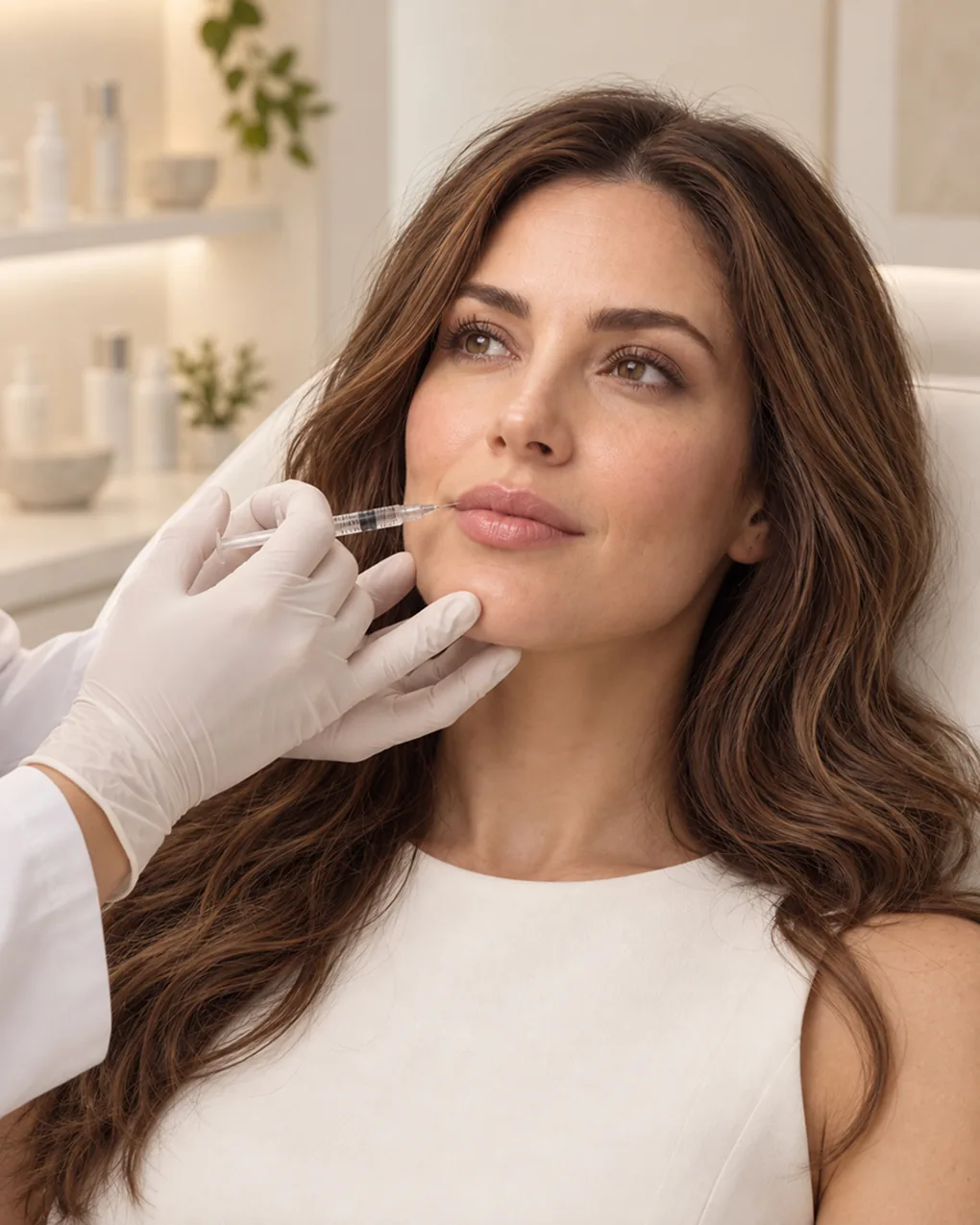
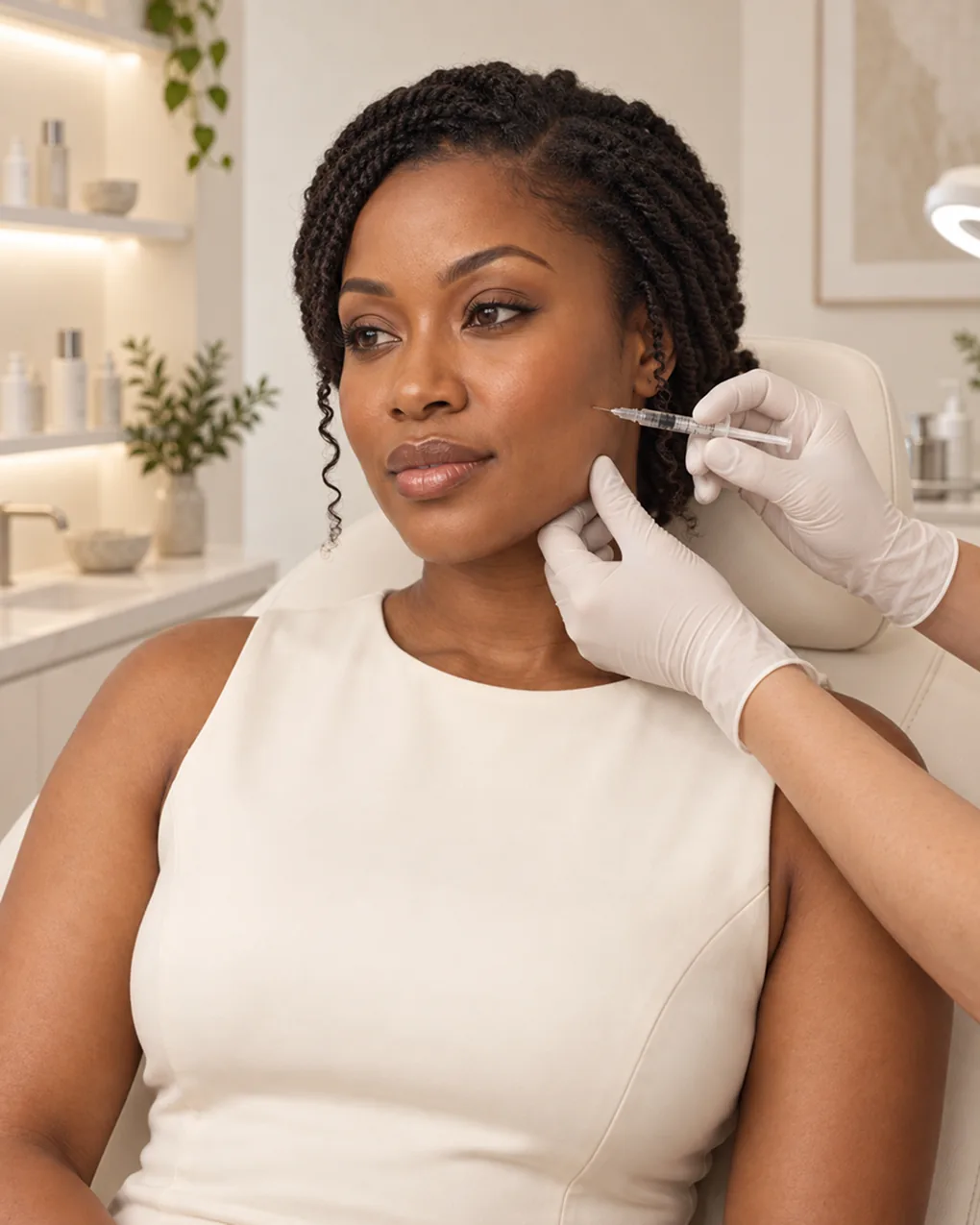
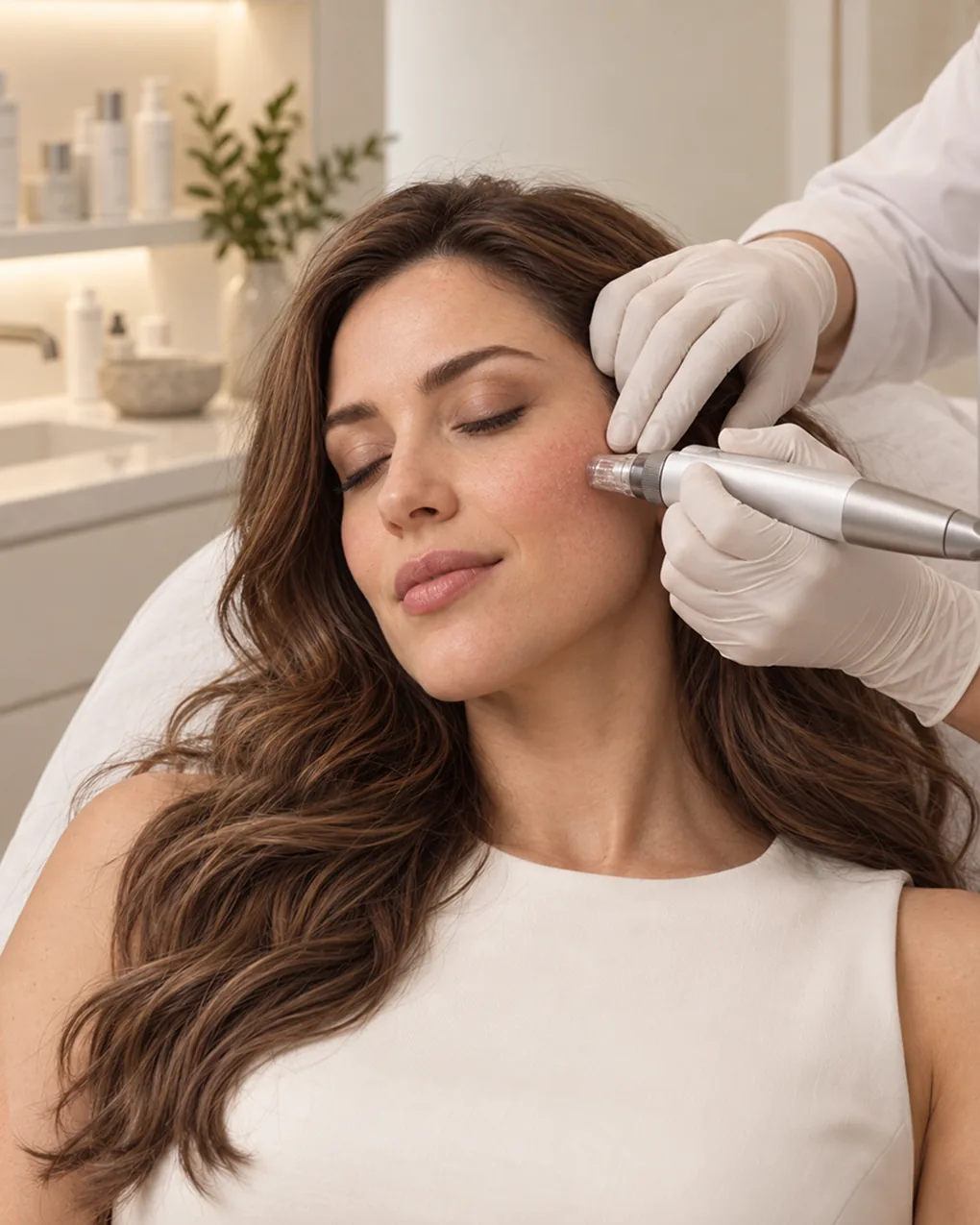
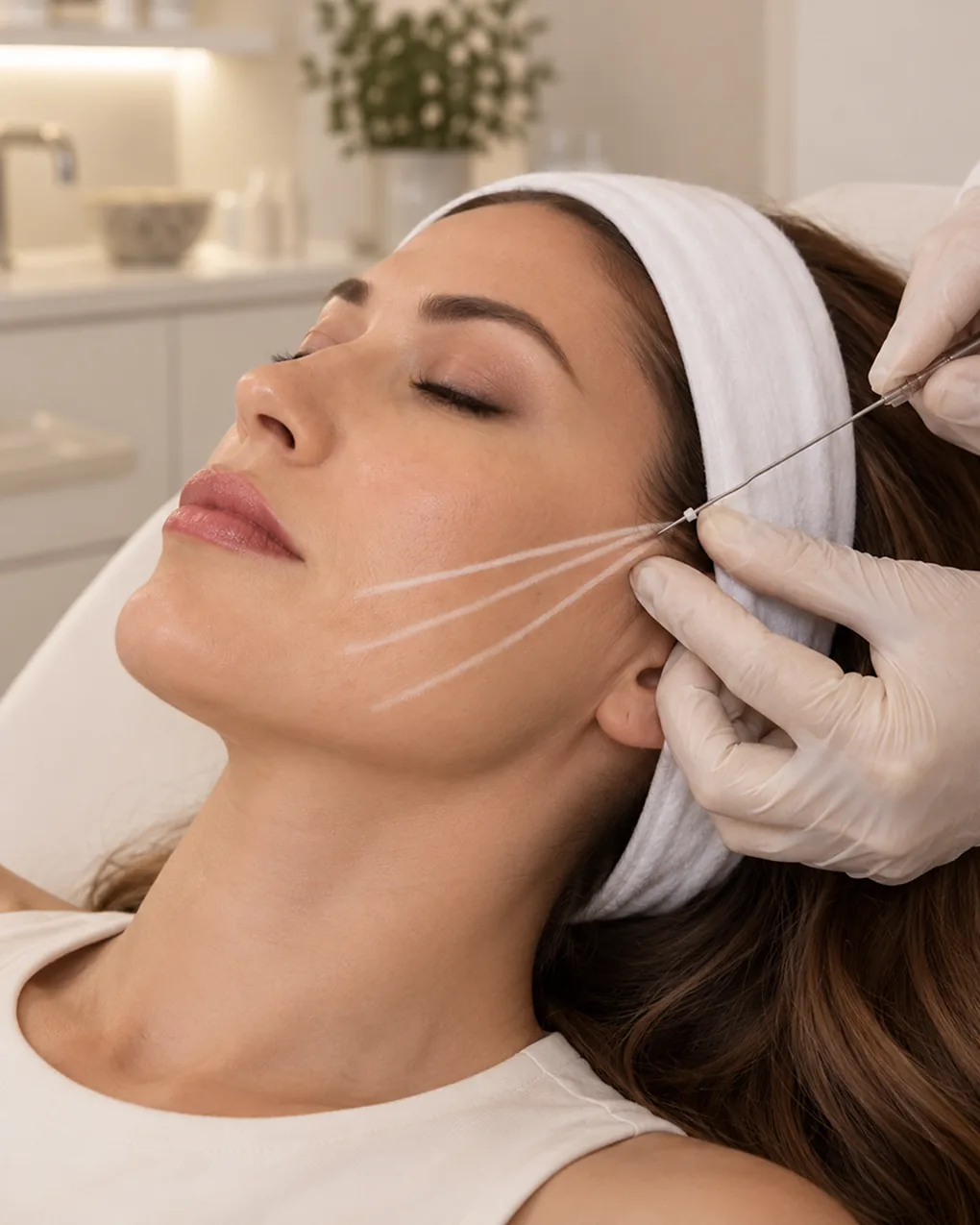
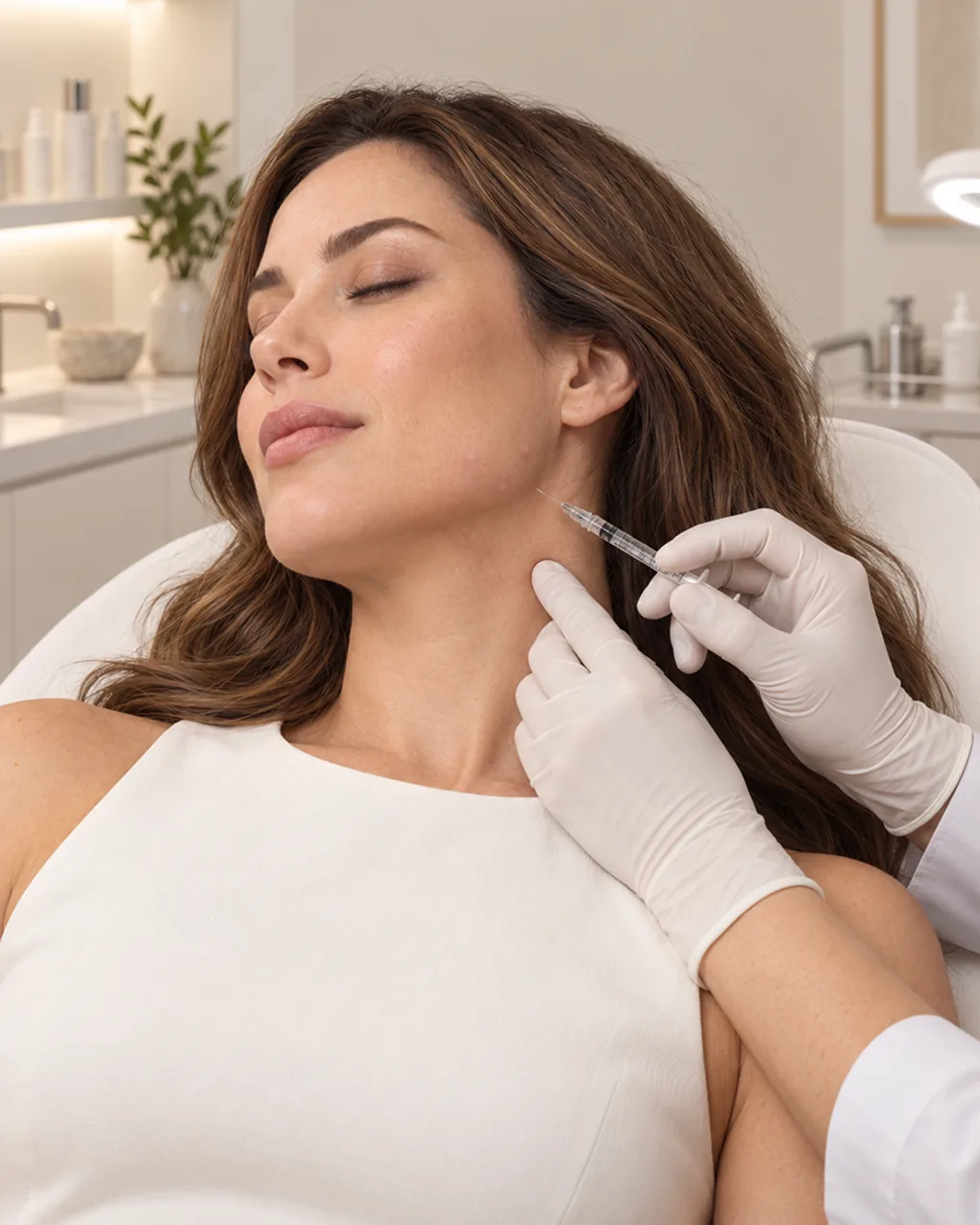
Mesotherapy delivers a mesococktail with a fine needle in a tight grid of micro-injections into more superficial layers of the skin (or scalp) than skin boosters. Active ingredients are delivered directly into the tissue, bypassing the outer skin barrier, which makes them more effective than at-home skincare.
Which Ingredients We Use in Mesotherapy
The mesococktail is individualized and can combine classic components — B and C vitamins, amino acids, peptides, antioxidants, and trace elements — with active biostimulators:
- Hyaluronic acid — hydrates, replenishes the skin’s water balance, and leaves skin looking fuller and smoother.
- NAD+ — supports and accelerates cellular energy metabolism and cell repair, builds resistance to oxidative stress, and supports DNA repair processes. The effect: glow, hydration, improved texture, and gradually firmer, better-quality skin.
- Exosomes — a cell-signaling technology that boosts cell communication, accelerating regeneration and improving texture, hydration, and elasticity, while softening fine lines and refining enlarged pores.
- PDRN (polynucleotides) — the primary regenerative ingredient, supporting tissue repair and fibroblast activity; often used in protocols for rosacea and inflamed or irritated skin.
- Glutathione — an antioxidant that can help even out skin tone and add radiance.
Your specialist selects the specific combination for your goal — hydration, improved skin tone, or stronger hair follicles. All products used are FDA-approved.
Mesotherapy for Hair
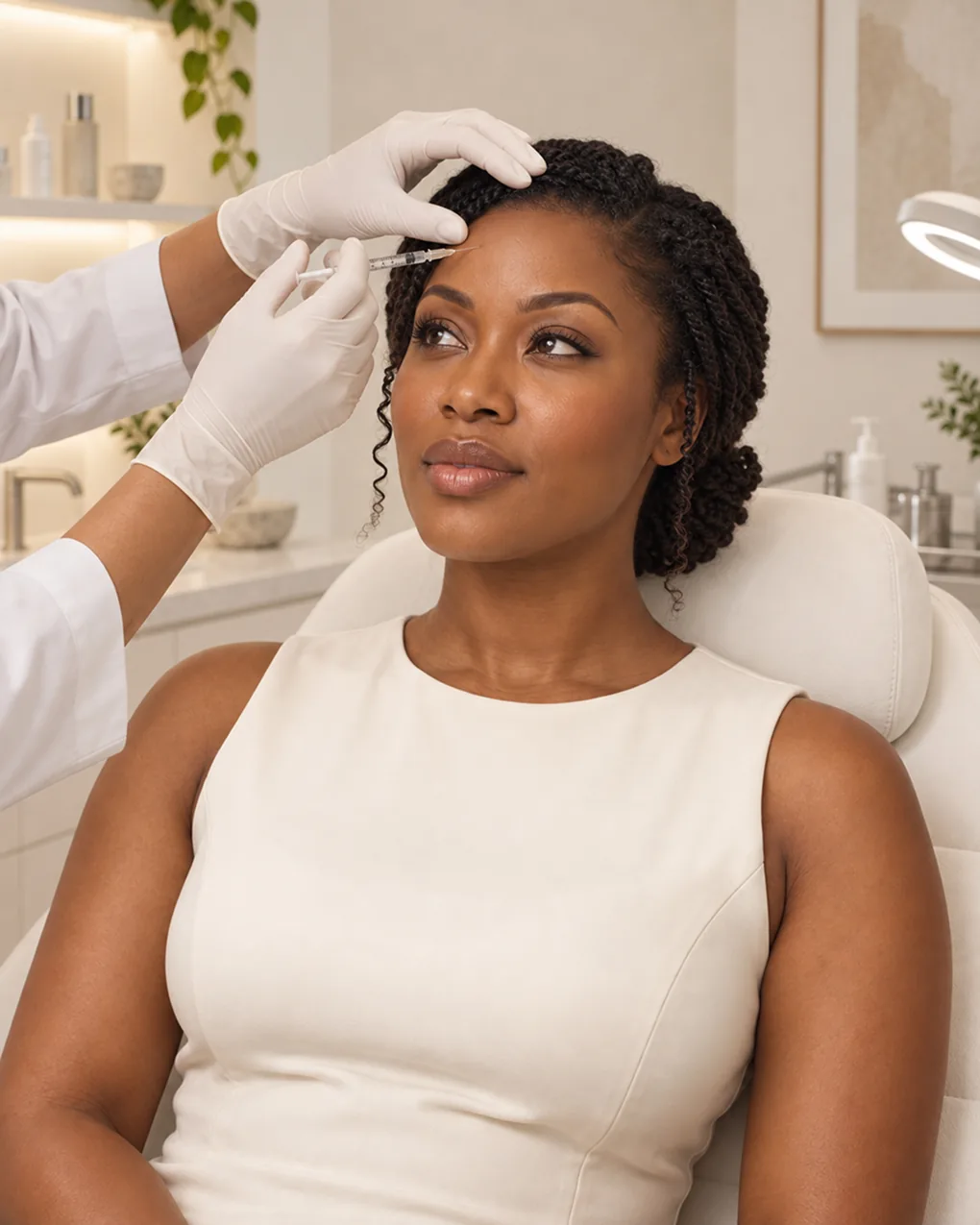
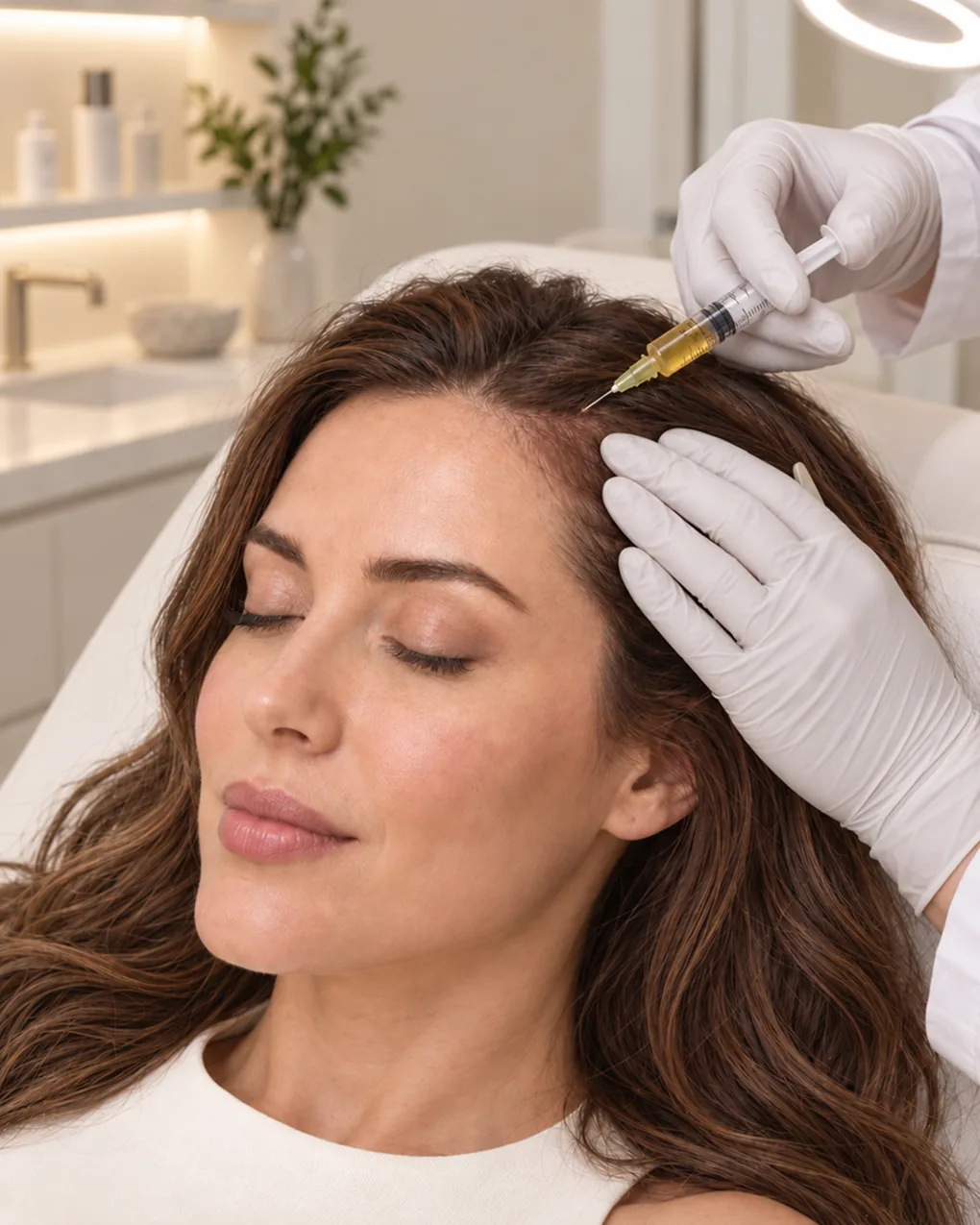
A separate, highly requested application is scalp mesotherapy for hair strengthening and growth stimulation. A mesococktail of vitamins, amino acids, and trace elements is injected into the scalp, improving nourishment to hair follicles and overall scalp condition. The scalp mesococktail can also include the same biostimulators we use for facial mesotherapy (PDRN, exosomes, NAD+) — the exact formulation is set at consultation. This treatment runs as its own course and is often combined with other hair-strengthening methods, including PRP — the specific protocol is discussed at consultation.
Mesotherapy, Skin Boosters, or PRP: What’s the Difference
These are three different approaches to skin care through micro-injections, and we always walk through the difference at consultation. The key distinction between mesotherapy and skin boosters isn’t really about ingredients (both can use similar active components — hyaluronic acid, NAD+, PDRN, exosomes) — it comes down to depth and technique: mesotherapy uses more superficial techniques, while skin boosters are delivered intradermally and subdermally, into deeper layers of the dermis. PRP doesn’t introduce any outside substance at all — only a concentrate from the patient’s own blood. If you need targeted, superficial correction for a specific issue, an individualized mesococktail is often more effective; if the priority is deep hydration and stimulation at a deeper level, skin boosters are usually the better choice. Many patients combine these treatments as part of an overall care protocol.
How the Treatment Works
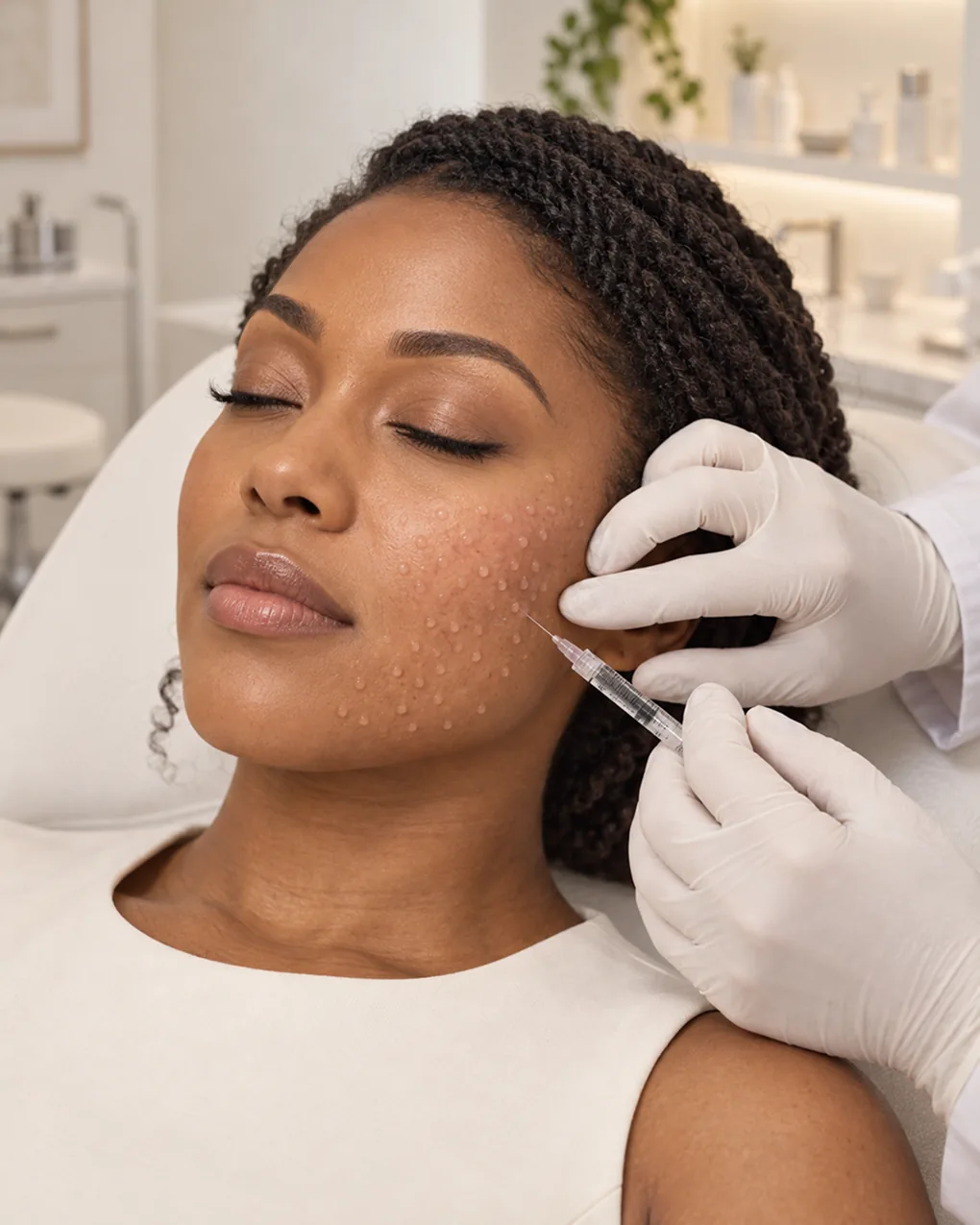
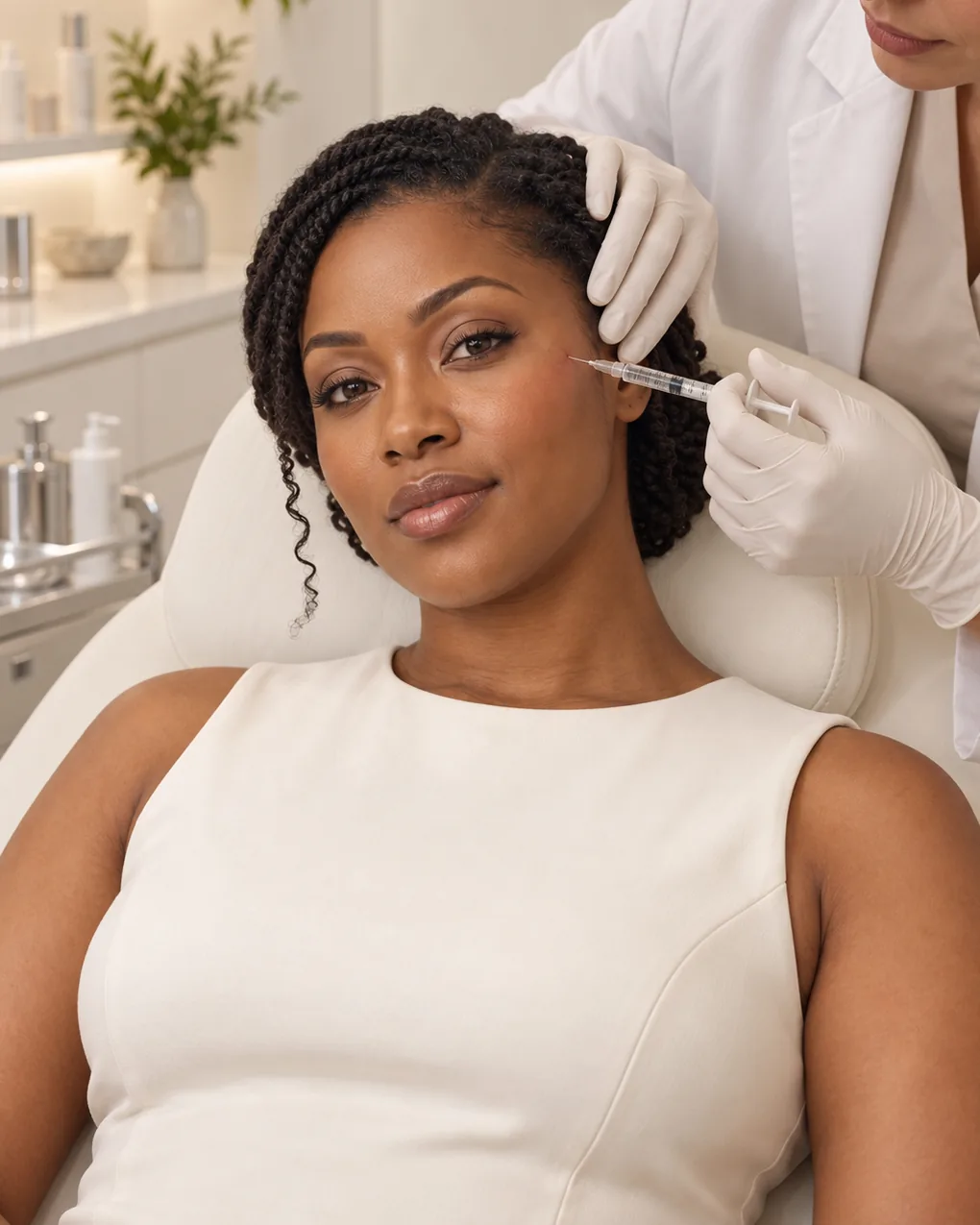
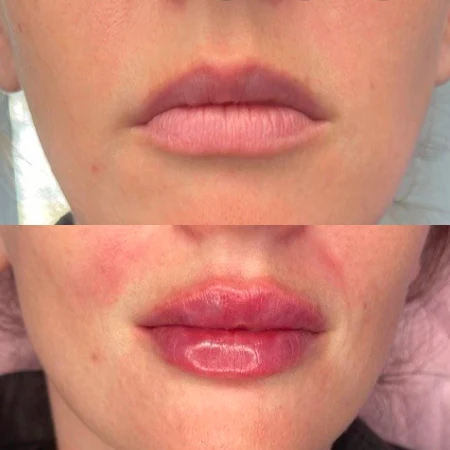
Your specialist reviews the condition of your skin or hair and selects the mesococktail. The product is delivered with a papule technique — a grid of tiny, closely spaced micro-injections across the treatment area; a similar technique is used on the scalp. Small bumps are visible on the skin right after treatment — an expected part of the technique, not a complication — and resolve on their own within a few hours, up to a day. All products used are FDA-approved.
Mild redness and small pinpoint bruises are also possible and usually fade within 1–3 days. You can return to your normal routine right away, though we recommend skipping makeup on the treated area for the first 24 hours and avoiding saunas, steam rooms, and intense exercise.
How Many Sessions You’ll Need, and How Long Results Last
A standard course is typically 4–6 sessions, spaced 1–2 weeks apart — it’s the course, not a single session, that produces a cumulative effect. Results generally last 4–6 months after the course is complete, after which maintenance sessions every few months are recommended.
Safety and Contraindications
Cost of Mesotherapy in Boca Raton
Cost depends on the area treated (face, scalp, or both), the mesococktail formulation, and the number of sessions in your course — your specialist will confirm the exact plan and price after your consultation and exam.
Why Patients Choose VESA
Aleksandra Grebenshchikova holds a medical degree from Kemerovo State Medical Academy (Russia) and advanced training in aesthetic cosmetology and injection techniques from The First Institute of Aesthetics and Cosmetology in Moscow. She practices in Florida as a Registered Nurse with a Master of Science in Nursing (RN, MSN, Florida National University) and is VESA’s injector, with 15 years of experience in injectable aesthetics, including facial and scalp mesotherapy.
We always build the mesococktail and course protocol around the real condition of your skin or hair, rather than a standard formula.
FAQ: Mesotherapy
What’s the difference between mesotherapy and skin boosters?
The main difference is depth and technique: mesotherapy uses more superficial techniques, while skin boosters are delivered intradermally and subdermally. The ingredients can be similar in both — from hyaluronic acid to NAD+, PDRN, and exosomes.
How many sessions do I need for a course?
Usually 4–6 sessions, spaced 1–2 weeks apart — the course produces the cumulative effect.
Why do small bumps appear after treatment?
This is an expected part of the papule injection technique, not a complication. They resolve on their own within a few hours, up to a day.
How long do mesotherapy results last?
On average, 4–6 months after your course is complete, after which maintenance sessions are recommended.
Does mesotherapy help with hair loss?
Yes, scalp mesotherapy improves nourishment to hair follicles and overall scalp condition, often alongside other hair-strengthening methods.
Does it hurt?
Discomfort is minimal — a fine needle is used, and numbing cream is applied if needed.
Are there any contraindications?
Yes — pregnancy and breastfeeding, active inflammatory skin conditions, a tendency toward keloid scarring, and sensitivity to any ingredient in the cocktail. A full list is reviewed at consultation.
Can mesotherapy be combined with other treatments?
Yes, mesotherapy is often combined with skin boosters or PRP as part of an overall skin or hair care protocol.
Individual results vary and are not guaranteed. Mesotherapy is a medical treatment that requires an in-person consultation to review candidacy and contraindications. Information on this page is for general reference only and does not replace a consultation with a specialist.